2026年 プレ会議ワークショップ
Bio-IT Worldでは、5月19日火曜日の午前と午後に、プレ会議ワークショップを開催します。このワークショップは、指導的かつインタラクティブなもので、特定のトピックに関する詳細な情報を提供します。1対1の交流が可能で、木曜日~金曜日に開催される主要な会議トラックでは取り上げられないような、技術的な側面を探る絶好の機会となっています。
-
業界の専門家やソートリーダーと直接交流できます。
-
インタラクティブな少人数グループで、新しい手法を実践的に学びます。
-
ライフサイエンスの未来を形作る最先端ツールとテクノロジーを実際に体験できます。
別途登録が必要
Tuesday, May 19, 2026 9:00 - 12:00 pm
W1: Building Workflows and Advancing FAIR Bioinformatics Practices: A Practical Lab Using the Playbook Workflow Builder (PWB)
Chairperson's Remarks
 Ishwar Chandramouliswaran, Program Director, Office of Data Science Strategy, NIH
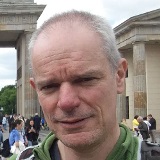 Nick Lynch, PhD, Founder & CTO, Curlew Research; Member, FAIRplus Consortium
Building Workflows and Advancing FAIR Bioinformatics Practices: A Practical Lab Using the Playbook Workflow Builder (PWB)
 Daniel Clarke, Biomedical Software Developer, Icahn School of Medicine at Mount Sinai
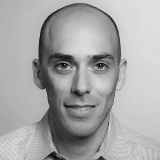 Avi Ma'ayan, PhD, Professor & Director, Center for Bioinformatics, Pharmacological Sciences, Icahn School of Medicine at Mount Sinai
WORKSHOP OBJECTIVES: The Playbook Workflow Builder (PWB) is a web-based platform that facilitates the interactive construction of bioinformatics workflows by enabling users to utilize an ever-growing network of input datasets, semantically annotated API endpoints, and data visualization tools. Via a user-friendly web-based user interface, workflows can be constructed from contributed building blocks without technical expertise. Workflows can be alternatively created using a chatbot. The output of the workflows includes an interactive online report, a publication-like PDF file, and a YouTube video. The workshop will demonstrate how to use the platform via interactive sessions, as well as introduce ways for the community to contribute workflow building blocks to the platform.
OUTCOMES: Participants will gain hands-on experience analyzing genes, gene sets, and other datasets; forming hypotheses from omics data; and building workflows designed for reuse, provenance tracking, and FAIR compliance. Working in groups, participants will be able to create use cases for drug and target discovery and ask questions that would be answered by community experts. Participants will leave with the ability to conduct analysis and visualization without coding, extend PWB capabilities, and contribute workflows that are discoverable, shareable, and reproducible.
AUDIENCE AND PRE-REQUISITES: This workshop serves anyone seeking help analyzing omics datasets or contributing to a community ecosystem of FAIR-aligned tools and workflows. No prerequisites necessary to register for this workshop.
AGENDA:
9:10 - 10:00 am Presentations: Tour of the Platform and Use Cases
10:00 - 11:00 am Hands-On Session*: Building and Publishing Workflows with PWB
User guide: https://github.com/MaayanLab/Playbook-Workflow-Builder/blob/main/docs/user/index.md
11:00 am - 12:00 pm Hands-On Session*: Creating Building Blocks to Add to the PWB Platform
Developer guide: https://github.com/MaayanLab/Playbook-Workflow-Builder/blob/main/docs/index.md
*Please bring your laptop to participate in the interactive sessions.
The Playbook Workflow Builder project is partially funded by the NIH grant OT2OD036435 for the CFDE Data Coordination Center (DRC) of the CFDE. Please visit the CFDE Workbench website for more details about the CFDE and the DRC: https://info.cfde.cloud/.
PWB Website: https://playbook-workflow-builder.cloud/
PWB Publication: https://journals.plos.org/ploscompbiol/article?id=10.1371/journal.pcbi.1012901
INSTRUCTOR BIOGRAPHIES:
Avi Ma'ayan, PhD, Professor & Director, Center for Bioinformatics, Pharmacological Sciences, Icahn School of Medicine at Mount Sinai
Daniel Clarke, Biomedical Software Developer, Icahn School of Medicine at Mount Sinai
Ishwar Chandramouliswaran, Program Director, Office of Data Science Strategy, NIH
Nick Lynch, PhD, Founder & CTO, Curlew Research; Member, FAIRplus Consortium
W2: How to Standardize Data Science Ways of Working to Unlock Your Data Science Team’s Creativity
How to Standardize Data Science Ways of Working to Unlock Your Data Science Team’s Creativity
Eric Ma, PhD, Principal Data Scientist, Moderna, Inc.
Jackie Valeri, PhD, Data Scientist, Moderna, Inc.
How do you standardize workflows without stifling innovation? How do you hire in an age where AI can write code? This interactive workshop explores strategies for building data science teams in biotech. Through facilitated discussion and examples, we'll examine delivery models, tactics, and hiring approaches that balance standards with creativity. Discover how to make best practices the path of least resistance while selecting members who thrive alongside AI tools.
INSTRUCTOR BIOGRAPHIES:
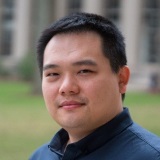 Eric Ma, PhD, Principal Data Scientist, Moderna, Inc.
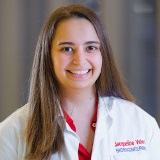 Jackie Valeri, PhD, Data Scientist, Moderna, Inc.
W3: Next-Gen AI for Drug Discovery: From LLMs to Multi-Agent Systems
Next-Gen AI for Drug Discovery: From LLMs to Multi-Agent Systems
Petrina Kamya, PhD, Global Head of AI Platforms & Vice President, Insilico Medicine; President, Insilico Medicine Canada
This workshop explores how artificial intelligence is advancing drug discovery. The focus is on how next-generation, agentic AI frameworks move beyond standalone large language models (LLMs) to connect data, design, and decision-making across the R&D pipeline. Attendees will gain an understanding of how next-generation, agentic AI frameworks integrate predictive modeling, generative design, and experimental validation through connections with knowledge graphs, FAIR data standards, and ELN/LIMS platforms. The session will highlight how agentic AI enables unified, AI-ready workflows spanning molecular design to translational research, driving measurable impact by accelerating discovery, enhancing traceability, and improving decision quality. Through presentations and real-world examples, participants will learn how to assess their organization’s readiness for multi-agent AI and how to apply these technologies to build smarter, reliable, and compliant R&D workflows.
Topics to be Covered:
- How drug discovery is evolving from LLM-based tools to agentic, multi-agent AI ecosystems
- The role of knowledge graphs, FAIR data, and lab informatics systems in building interoperable discovery pipelines
- Practical examples of agentic AI connecting predictive, generative, and experimental workflows
- Strategies to assess readiness and integrate multi-agent systems for measurable innovation and compliance
Intended Audience: Drug discovery scientists, computational biologists, data engineers, informatics specialists, and R&D professionals interested in how next-generation agentic AI and multi-agent systems can unify data, design, and decision-making to accelerate innovation across the life-sciences enterprise.
Parthiban Srinivasan, PhD, Professor and Director, Centre for AI in Medicine, Vinayaka Mission's Research Foundation, India
INSTRUCTOR BIOGRAPHIES:
 Parthiban Srinivasan, PhD, Professor and Director, Centre for AI in Medicine, Vinayaka Mission's Research Foundation, India
 Petrina Kamya, PhD, Global Head of AI Platforms & Vice President, Insilico Medicine; President, Insilico Medicine Canada
Tuesday, May 19, 2026 1:15 - 4:15 pm
W4: Making Data AI-Ready
Making Data AI-Ready
Fernanda Foertter, MSc, Executive Director, The University of Alabama High Performance Computing and Data Center
INSTRUCTOR BIOGRAPHY:
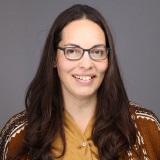 Fernanda Foertter, MSc, Executive Director, The University of Alabama High Performance Computing and Data Center
W5: Quantum Computing in Life Sciences: From Fundamentals to Future Applications
Quantum Computing in Life Sciences: From Fundamentals to Future Applications
Christopher Bishop, Chief Reinvention Officer, Improvising Careers
This workshop introduces the essentials of quantum computing and its emerging role in life sciences. Participants will learn how quantum methods differ from classical approaches and explore early applications in drug discovery, molecular modeling, and complex data analysis. The session highlights realistic timelines, current capabilities, and future opportunities, offering a clear foundation for understanding quantum’s potential impact on research and industry.
Gopal Karemore, PhD, Global Quantum Lead, Healthcare & Life Sciences, IBM Research
Nima Leclerc, Principal Investigator and Quantum Research Scientist, MITRE
 Talk Title to be Announced
Speaker to be Announced, Kvantify
Presentation to be Announced
When Quantum Meets Pharma: Inside the Race to Design Drugs
Christopher Bishop, Chief Reinvention Officer, Improvising Careers
Shahar Keinan, PhD, Co-Founder & CEO, POLARISqb
Panel with Christopher Bishop
Zoran Krunic, Senior Manager, Data Science, R&D, Amgen, Inc.
INSTRUCTOR BIOGRAPHIES:
 Christopher Bishop, Chief Reinvention Officer, Improvising Careers
 Gopal Karemore, PhD, Global Quantum Lead, Healthcare & Life Sciences, IBM Research
 Nima Leclerc, Principal Investigator and Quantum Research Scientist, MITRE
 Shahar Keinan, PhD, Co-Founder & CEO, POLARISqb

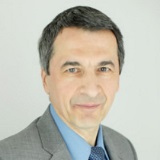 Zoran Krunic, Senior Manager, Data Science, R&D, Amgen, Inc.
W6: AI Upskilling for Computational Biology Teams
AI Upskilling for Computational Biology Teams
Ryan Bellmore, Owner/Founder, Right Bionic
Sonia Timberlake, PhD, R&D Strategy Consultant, Timberlake & Maclsaac Biopharma Consulting
INSTRUCTOR BIOGRAPHIES:
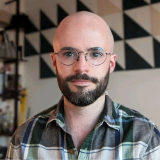 Ryan Bellmore, Owner/Founder, Right Bionic
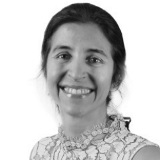 Sonia Timberlake, PhD, R&D Strategy Consultant, Timberlake & Maclsaac Biopharma Consulting
*不測の事態により、事前の予告なしにプログラムが変更される場合があります。
オンデマンドパスは引き続きお申込み頂けます。
下記ボタンよりご連絡下さい。


アジェンダ・講演者・スポンサー更新
アジェンダ・講演者・スポンサー更新
アジェンダ・講演者・スポンサー更新
アジェンダ・講演者・スポンサー更新
アジェンダ・講演者・スポンサー更新
アジェンダ・講演者更新
アジェンダ・講演者・スポンサー更新
スポンサー更新
イベント情報更新
Conference Tracks