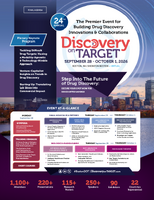
ブレイクアウトディスカッション
ブレイクアウトディスカッションは、承認制の非公式なディスカッションで、特定のトピックについて意見や経験を交換し、将来的なコラボレーションを築くことができます。各ディスカッションはファシリテーター(1名または複数名)が主導し、ディスカッションの進行とグループの関与を促します。最大限に活用するには、自分の研究事例を共有し、集団的な問題解決セッションの一員となり、活発なアイデアの共有に参加できるように、ご準備ください。
すべてのブレイクアウトディスカッションは、対面のみで提供されます。イベント期間中に行われる、ブレイクアウトディスカッションのいずれかにも参加できます。各ブレイクアウトディスカッションのトピック、日時、場所の詳細については、「ブレイクアウトディスカッション」ページでご確認ください。
WEDNESDAY, SEPTEMBER 30, 2026 | 7:30-8:15 AM (breakfast will be provided)
PLENARY BREAKOUT DISCUSSIONS
COLLABORATIVE CONVERSATIONS FOR WOMEN IN SCIENCE (Republic Foyer)
Moderators:
Charu Chaudhry, PhD, Associate Director, Molecular Pharmacology, J&J Innovative Medicine
Andrea Geist, Senior Scientist, R&D, EMD Serono
- Building a reputation inside pharma, biotech, academia, or VC circles
- How and when to say yes/no strategically
- Getting credit for ideas, publications, and project wins; navigating promotion
- Evaluating alternative careers in science
- Prioritizing work-life balance
BEDSIDE TO BENCH- DRIVING RESEARCH THAT HAS REAL PATIENT IMPACT (Republic Foyer)
Moderators:
Michael Liebman, PhD, Managing Director, IPQ Analytics, LLC
Neil Pfister, MD, PhD, Chief Medical Officer, Research Division, Numenos
- Need to evolve from precision medicine towards accurate medicine to better identify and define causality
- Use of technology to identify appropriate targets for drug development, including AI/ML methods
- AI-based approaches to human-first reverse translation, which means starting from the true unmet clinical need (identified in patients)
- Identifying therapy combinations and overcoming drug resistance mechanisms
WINNING THE RACE AGAINST CANCER THERAPY RESISTANCE (Constitution A)
Moderator: Neil A. Bhowmick, CSO, Kairos Pharma Ltd.
- How can we target the adaptive states that precede resistance
- How do we prioritize drug combinations?
- How can computational approaches accelerate target identification?
- What will define the next discovery to have clinical impact?
CHALLENGES IN SMALL MOLECULE DISCOVERY FOR AUTOIMMUNE TARGETS (Constitution A)
Moderator: Wankyu Lee, PhD, Industry Research Analyst, Drug Hunter
- What immune biology is underexplored and where are the opportunities to explore novel therapeutic strategies/hypotheses
- How do we best match modalities to the target biology in immunology? (Modalties such as: antibodies, oligonucleotides, degraders, inhibitors). STAT6 as an example - degradation vs inhibition?
- Establishing preclinical proof of concepts for better in vivo translation and better toxicology prediction
- What do we think the next blockbuster immunology drug will look like?
NEW SCREENING TOOLS FOR DESIGN & OPTIMIZATION OF MOLECULAR GLUES (Constitution B)
Moderators:
Maria Soloveychik, PhD, Co-Founder & CEO, SyntheX
Jin Wang, PhD, Director, Biochemistry and Molecular Pharmacology, Baylor College of Medicine
Thomas Kodadek, PhD, Professor, Department of Chemistry, University of Florida, Scripps Biomedical Research
- Rational design frameworks to make glue discovery systematic and not serendipitous
- Optimizing screening tools and throughput for molecular glue discovery
- The promise of AI/ML-assisted molecular glue design
- Building a scalable discovery engine for molecular glues
- Overcoming tissue specificity challenges
EXPLORING NEW CHEMISTRIES AND CELLULAR PATHWAYS FOR DEVELOPING NEXT-GENERATION DEGRADERS (Constitution B)
Moderators:
Alexander Alanine, PhD, Senior Vice President, Head of Chemistry, TRIMTECH Therapeutics Limited
Others to be announced
- Designing more drug-like PROTACs and glues with improved bioavailability
- Developing tissue-selective and CNS penetrant degraders
- Expanding beyond CRBN/VHL ligases
- Learnings from pursuing historically challenging drug targets using PROTACs
- Overcoming safety, IVIVC translation, and resistance concerns
COVALENT DRUG DESIGN STRATEGIES (Back Bay B)
Moderator: Jack Sloane, PhD, Principal Scientist, Medicinal Chemistry, Bristol-Myers Squibb
- How to start? Build from fragments? Convert potent binders?
- Novel warhead options
- Beyond cysteine: targeting other nucleophilic amino acids
MODERN GPCR-TARGETED DRUG DISCOVERY (Back Bay B)
Moderator: Marek Orzechowski, PhD, Director, Computational Chemistry, Superluminal Medicines Inc
- Which hit-finding strategies are delivering tractable GPCR leads right now: DNA-encoded libraries, fragment-based, virtual screening, or phenotypic?
- Where is AI/ML changing the GPCR discovery workflow, and where is it still overpromising?
- Which functional readouts (G protein, arrestin, second messenger) do teams trust enough to drive go/no-go decisions, and when does biased signaling become a real design goal?
INNOVATIVE DISCOVERY TECHNOLOGIES
SURGE IN PROTEOMICS & D2B SCREENING METHODOLOGIES (Back Bay C)
Moderators:
Steve Gygi, PhD, Professor, Department of Cell Biology, Harvard Medical School
Others to be announced
- Using D2B and proteomics screening to tackle previously "undruggable" targets
- Successful applications of D2B screening for hit-to-lead and more
- Chemoproteomics for target identification and covalent drug discovery
- Applications of high-throughput, single-cell, live cell mass spectrometry and quantitative proteomics
- Integrating multi-omics datasets for drug discovery
ADVANCES IN AI/ML-GUIDED DRUG DISCOVERY- WHAT’S WORKING (Back Bay C)
Moderators:
Daniel J. Haders II, PhD, CEO, Model Medicines
Lakshmi Kuttippurathu, PhD, Scientific Advisor Board Member, Computational Biology & Data Sciences, Bioscope AI
- AI-designed drugs receiving regulatory approval
- AI-driven pipeline showing faster transition and improved probability of success
- Success stories on AI-guided target and lead discovery
- Increased use of foundation models, generative chemistry, quantum AI
- Evidence measuring ROI to drive investments in AI
Antibodies Against Challenging Targets
THE FUTURE OF FUNCTIONAL BIOLOGICS: HOW AI IS CHANGING TARGET DISCOVERY, DESIGN, AND THERAPEUTIC MODULATION (Back Bay A)
Moderator: Alon Wellner, Vice President, Biology, Co-Founder, Aureka Biotechnologies
- Moving Beyond Binding: Designing for Function
- Data Bottlenecks in AI-Driven Drug Discovery
- The Convergence of Computation and Experimentation
- Expanding the Druggable Genome
- Measuring Success and Adoption
CHALLENGES AND OPPORTUNITIES FOR IMMUNE-MODULATING ANTIBODY CONJUGATES (Back Bay D)
Moderator: L. Nathan Tumey, PhD, Associate Professor, Pharmaceutical Sciences, SUNY Binghamton
- How can immune-stimulating antibody conjugates (ISACs) demonstrate superiority or differentiation from traditional cytotoxic ADCs in preclinical models?
- What are some unique challenges associate with moving ADC technology from oncology into immunology applications?
- How can teams understand the risk of immunogenicity in preclinical animal models?
- Is at-home subcutaneous dosing a “nice-to-have” or a “must-have” for ADCs in autoimmune diseases? How can properties for SQ dosing be designed into the ADC early in the design phase?
ADVOCACY ROUNDTABLE DISCUSSION: ADDRESSING PATIENT ACCESS TO RADIOLIGAND THERAPY (Gardner)
Moderators:
Mike Crosby, Ambassador & Board Member, Oncidium Foundation
Jean-Luc Vanderheyden, PhD, Head, Oncidium Foundation
- How advocacy organizations can help patients and caregivers better understand radioligand therapy, theranostics, and available treatment options
- Practical barriers patients face in accessing RLT, including geographic location, referral pathways, insurance coverage, financial burden, and treatment-site availability
- How industry, treatment centers, clinicians, and advocacy groups can collaborate responsibly to improve education, awareness, and patient navigation
- Opportunities to build stronger patient-centered resources, including site-finder tools, educational materials, community outreach, and support programs for underserved populations
THE NEXT WAVE OF RADIOPHARMACEUTICAL INNOVATION: WHERE ARE THE REAL OPPORTUNITIES? (Gardner)
Moderator: Muhammet Tanc, PhD, CEO, Nuclide Therapeutics
- Exploring where the biggest opportunities may emerge: new target biology, underserved tumor types, improved patient selection, or next-generation isotopes
- Discussing how to distinguish attractive scientific ideas from opportunities that are truly translatable, scalable, and commercially viable
- Sharing perspectives on what biotech, pharma, academia, and investors each need to see before committing to the next wave of radiopharmaceutical programs
WEDNESDAY, SEPTEMBER 30, 2026 | 5:50-6:30 PM
PLENARY BREAKOUT DISCUSSION
CONNECT THE DOTs: START-UPs & FUNDING (Republic Foyer)
Moderators:
Shruthi Bharadwaj, PhD, Executive Director, AI Drug Discovery Analytics, Revolution Medicines
Rhonda Wallen, CEO & Advisor
- Life science market trends and its impact on R&D
- Startup formation: when a discovery becomes a company
- Investor appetite and what makes science “fundable”
- What makes good research get noticed
- Evaluating funding options: private, government, partnerships
THURSDAY, OCTOBER 1, 2026 | 7:30-8:15 AM (breakfast will be provided)
PLENARY BREAKOUT DISCUSSIONS
SETTING UP COLLABORATIONS & PARTNERSHIPS (Republic Foyer)
Moderators:
Shruthi Bharadwaj, PhD, Executive Director, AI Drug Discovery Analytics, Revolution Medicines
Elena Diez Cecilia, PhD, MBA, Senior Director, External Innovation, JNJ Innovation Center
- Market trends and how they affect R&D priorities
- AI impact on changing workflows
- Pharma/academia-biotech partnerships
- End-user/service provider partnerships
- How to choose the right partner for collaboration?
CONNECT THE DOTs: CAREER GROWTH OPPORTUNITIES (Republic Foyer)
Moderators:
Devesh Aggarwal, Scientist, Biologics Engineering, AstraZeneca
Francis X. Wilson, PhD, CSO, Avacta Life Sciences
- Career paths: academia vs biotech vs pharma vs VC/startups
- Talent gaps in drug discovery
- The future of scientific careers as AI changes workflows
- How to move from strong contributor to recognized leader
- What are the non-scientific skills that help your career the most
DRUG DISCOVERY FOR HEALTHY AGING (Republic Foyer)
Moderators:
Rekha Paleyanda PhD, Partner, Rising Tide Strategies LLC
Angelika Fretzen, PhD, MBA, COO & Technology Translation Director, Wyss Institute, Harvard University
Kathryn Rexrode, MD, MPH, Chief Academic Officer & Chief, Division of Women’s Health, Brigham & Women’s Hospital
- Focusing on healthspan versus lifespan
- Adopting a patient-centric in treating cancer, cardiovascular, neurodegeneration and other disorders
- Strategies and advances for improving translational research
- Understanding sex differences in immune response, metabolism, inflammation
EMERGING CONCEPTS IN NEURODEGENERATION (Constitution A)
Moderator: Tauseef Butt, PhD, President & CEO, Progenra, Inc.
- Lysosomal dysfunction and therapeutic opportunities
- Mitochondria, why is it so hard to target for neurodegenerative drugs
- Blood-based and reliable biomarkers for early detection of neurodegenerative diseases
EMERGENCE OF NEW MODALITIES & THEIR LIKEHOOD OF CLINICAL SUCCESS (Constitution B)
Moderators:
Charu Chaudhry, PhD, Associate Director, Molecular Pharmacology, J&J Innovative Medicine
Others to be announced
- Oral peptides, peptidomimetics, macrocycles
- Drug conjugates and biomolecular condensates
- Beyond oncology- new approaches to tackle autoimmunity, musculoskeletal disorders, inflammation
- Strategies for priming the target tissue for improved response to drug treatment
- Impact of AI/ML in helping new modalities improve their efficacy and safety profiles
PROS AND CONS OF DEGRADER CONJUGATES (Constitution B)
Moderators:
John Brognard, PhD, Professor of Surgery, Upstate Medical University
Ryan Holmes, PhD, Associate Director, Chemistry, Prelude Therapeutics Inc
- Updates on new degrader conjugate modalities in development
- Choosing the right target for degradation
- Optimization of linker design and payload release
- Issues concerning choice and size of payload for conjugation
- Overcoming the challenges around intracellular and tissue-specific delivery
DIRECT-TO-BIOLOGY (D2B) (Back Bay B)
Moderator: Ken Yamada, PhD, Associate Director, Global Discovery Chemistry, Novartis BioMedical Research
- Why are you practicing or interested in D2B -- is it relatively new?
- How do you build your D2B library: in solution or on solid phase?
- How do you test them - MS, biochemical or cellular? Why or why not?
- How can we scale D2B to tens of thousands and beyond? Any experiences with SEL/mixture ASMS or eOBOC functional screens?
Building the Next Generation of DEL Datasets for AI (Back Bay B)
Timothy L. Foley, PhD, Senior Principal Scientist & Lab Head, DNA Encoded Library Selection & Pharmacology, Pfizer Global R&D Groton Labs
- What defines high-quality DEL data curation?
- Which metadata fields are essential for comparing campaigns across studies?
- What value do experimental replicates provide for AI and predictive modeling?
- Is Raw Data necessary? If so, should cutoffs be applied?
- Which enrichment normalization methods are most suitable for machine learning applications
- Intro to LigandAI, a consortium that aims to profile more than 1,000 proteins using DEL technology and make the resulting datasets publicly available
INNOVATIVE DISCOVERY TECHNOLOGIES
SCIENTIFIC WORK IN THE AGE OF AI AGENTS (Back Bay C)
Moderators:
William Hayes, VP, Data Sciences and Digital Technology, Montai Therapeutics
Arvind Rao, PhD, Associate Professor, Department of Computational Medicine and Bioinformatics, University of Michigan
Grant Stephen, CEO & Co-Founder, bPrescient, Inc.
- What does a genuinely "scientifically aware" agentic platform look like in practice?
- Does it make sense tackle a more constrained problem and expand, or work on broader, more ambitious projects?
- Where are organizations seeing early adoption, and is measurable ROI emerging yet?
- What friction points are slowing or blocking broader rollout?
- What does this mean for the future of the scientific community?
BEYOND THE MODALITY: WHAT REALLY DETERMINES SUCCESS IN TARGETED CONJUGATES (Back Bay D)
Moderator: Keykavous Parang, PhD, Professor, Biomedical and Pharmaceutical Sciences, Chapman University
- Which factors most strongly influence therapeutic success: target selection, linker design, payload, or delivery platform
- What lessons can be shared across ADCs, PDCs, radioconjugates, and other emerging targeted conjugate technologies?
- What scientific and translational advances are needed to improve efficacy, reduce toxicity, and expand patient access?
* 不測の事態により、事前の予告なしにプログラムが変更される場合があります。
オンデマンドパスは引き続きお申込み頂けます。
下記ボタンよりご連絡下さい。


アジェンダ・講演者・スポンサー更新
アジェンダ・講演者・スポンサー更新
講演者・スポンサー更新



Conference Programs
9月28日(月)
Symposium: Induced Proximity-Based Drug Discovery
シンポジウム: 近接誘導型の創薬
Symposium: Generative AI/Machine Learning-Driven Drug Design
シンポジウム: 生成AI/MLドリブンの医薬品設計
9月29日(火)~10月1日(木)
Emerging Drug Targets
新興の医薬品ターゲット
Novel Drug Modalities
新規医薬品モダリティ
Lead Generation Strategies
リードジェネレーション戦略
Innovative Discovery Technologies
革新的な探索技術
Antibodies against Challenging Targets
困難な標的に対する抗体
Next-Generation Conjugates
次世代コンジュゲート
Radioligand Therapies
放射性リガンド療法