
Training Seminars by Cambridge Healthtech Institute

Cambridge Healthtech Instituteのトレーニングセミナーでは、学術的な理論や背景を幅広くカバーするとともに、実際のケーススタディ、遭遇した問題、適用されたソリューションを提供します。各トレーニングセミナーでは、正式な講義とインタラクティブなディスカッションやアクティビティを組み合わせ、学習経験を最大限に高めることができます。経験豊富な講師が、現在の研究に適用可能なコンテンツに焦点を当て、この分野に不慣れな人にも重要なガイダンスを提供します。


トレーニングセミナーは、対面のみで提供
一貫性と集中できる学習環境を確保するため
会議セッションとトレーニングセミナー間の移動は禁止

Monday, 16 November 2026  08:30 - 17:00

TS1A: Introduction to Multispecific Antibodies: History, Engineering, and Applications

Introduction to Multispecific Antibodies is an informative and practical guide to getting up to speed on critical aspects of multispecific antibody therapeutics. Topics will include historical successes, failures, and lessons learned. Specific practical instruction will span mechanisms of action, engineering, developability, regulatory considerations, and translational guidelines. Perspectives on ideal implementation of multispecifics as targeted and immunomodulatory approaches will be discussed.
G. Jonah Rainey, PhD, Associate Vice President, Eli Lilly and Company

Topics to be covered:

  • A brief history of bispecific antibodies: 60 years of progress with critical advances and key pioneers
  • Bispecific applications and powerful mechanisms-of-action
  • Engineering bispecific antibodies: 100 formats and counting
  • Bispecific-specific considerations in preclinical development and regulatory landscape
  • Developability, manufacturing, and analytical considerations
  • Clinical experience, translation, and regulatory approval
  • Current trends and future opportunities in regulating immune checkpoints, cell-based therapies, and personalised approaches

INSTRUCTOR BIOGRAPHY:

G. Jonah Rainey, PhD, Associate Vice President, Eli Lilly and Company

Jonah Rainey holds a PhD in Biochemistry from Tufts University and completed postdoctoral training at the University of Wisconsin and the Salk Institute. He has engaged in discovery, research, and development of bispecific antibodies for more than 15 years. He is an inventor on several patents describing novel bispecific platforms and current clinical candidates that exploit these platforms as well as an author on almost 30 publications. Jonah contributed to research and early development leading to multiple clinical candidates from Phase I and through approved products and led many advanced preclinical programs in oncology, infectious disease, autoimmunity, and other therapeutic areas. Previous industry experience includes MacroGenics, MedImmune/AZ, Oriole Biotech, Gritstone Oncology, and Alivamab Discovery Services. Currently, Jonah is a Senior Director in Protein Science at Eli Lilly & Co.

TS2A: Everything You Ever Wanted to Know about Immunogenicity

This 1-day training seminar provides a practical, comprehensive overview of immunogenicity-the causes, how to assess an immunogenicity risk, and what to do if you observe immunogenicity during preclinical, clinical, and post-market approval. The seminar begins by detailing the science behind immunogenicity and the latest international guidance, followed by assay and bioanalytical assessment strategies for traditional and emerging biologics. Other topics include non-clinical models, the role of AI/ML, and reporting immunogenicity.
Chloé Ackaert, PhD, Senior Scientist, Immunogenicity, IQVIA Laboratories
Timothy Hickling, PhD, Consultant, Quasor Ltd.
Sofie Pattyn, Founder & CTO, IQVIA Laboratories

This 1-day training seminar provides a practical, comprehensive overview of immunogenicity-the causes, how to assess an immunogenicity risk, and what to do if you observe immunogenicity during preclinical, clinical, and post-market approval. The seminar begins by detailing the science behind immunogenicity and the latest international guidance, followed by assay and bioanalytical assessment strategies for traditional and emerging biologics. Other topics include non-clinical models, the role of AI/ML, and reporting immunogenicity.

INSTRUCTOR BIOGRAPHIES:
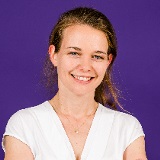
Chloé Ackaert, PhD, Senior Scientist, Immunogenicity, IQVIA Laboratories

Chloé Ackaert is a pharmacist by training (Catholic University of Leuven 2009) and obtained her PhD at the University of Salzburg (Austria) for the research on the impact of nitration on the immunogenicity of birch pollen allergens in 2013. She first joined ImmunXperts in the start-up phase and continued academic research at the Free University of Brussels (2015-2018) working on the immunogenicity of Nanobodies. Afterwards, she joined ImmunXperts again where she is a senior scientist in the immunogenicity team, collaborating both on the client-based projects as well as on the continuous basic research projects to elucidate immunogenicity-related questions.

Timothy Hickling, PhD, Consultant, Quasor Ltd.

Tim has 15 years’ experience contributing to immunogenicity risk and mitigation strategies for large molecules and advanced therapies at Roche and Pfizer, from early discovery projects to those in clinical development and post-marketing. During the last ten years he has contributed immunology expertise to the development of an in silico immunogenicity model, with the purpose of improving predictions of clinical immunogenicity for drug candidates. Tim previously worked on vaccine development and holds a PhD in Immunology from the University of Oxford.

Sofie Pattyn, Founder & CTO, IQVIA Laboratories

Sofie Pattyn, CTO and founder of Iqvia Laboratories In Vitro Immunology (Formerly known as ImmunXperts), has over 25 years of experience in the field of immunogenicity assessment (vaccines and biotherapeutics) and in vitro assay development with a focus on functional assays for immunogenicity, immune oncology, and cell and gene therapy products. She has extensive hands-on lab experience and has managed and coached several in vitro teams over the last decade. From 2008 until 2013, she was Head of the in vitro Immunogenicity group at AlgoNomics (Ghent, Belgium) and Lonza Applied Protein Services (Cambridge, UK). Prior to that, she worked at Innogenetics in Belgium for over 15 years.

TS3A: Introduction to Machine Learning for Biologics Design

This course offers an introduction to concepts, strategies, and machine learning methods used for biologics design. It includes presentations and demonstrations of the methods used in the field, covering techniques such as triaging sequences, modulating affinity, and designing antibody libraries, along with increasing manufacturability. The course is directed at scientists new to the field and protein engineers wanting an introduction to how machine learning can aid in guiding biologics design.
Christopher R. Corbeil, PhD, Research Officer, Human Health Therapeutics, National Research Council Canada
  • Basics of machine learning and where it fits into drug discovery
  • Modern homology modelling and structure prediction
  • Predicting antibody affinity and specificity modulation
  • Generative design in biologics: library design and language models
  • Machine learning applications of T cell and B cell immunogenicity
  • Methods and application of ML for chemical, folding, and solution stabilities

INSTRUCTOR BIOGRAPHY:

Christopher R. Corbeil, PhD, Research Officer, Human Health Therapeutics, National Research Council Canada

Dr. Christopher Corbeil is a research officer at the National Research Council Canada (NRC) who specializes in the development and application of computational tools for biotherapeutic design and optimization. He is also an associate member of the McGill Biochemistry Department and teaches classes in Structure-Based Drug Design at McGill University. After receiving his PhD from McGill University, he joined the NRC as a Research Associate investigating the basics of protein-binding affinity. Following his time at the NRC he joined Chemical Computing Group as a research scientist developing tools for protein design, structure prediction, and binding affinity prediction. He then decided to leave private industry and rejoin NRC with a focus on antibody engineering. Dr. Corbeil has authored over 30 scientific articles and is the main developer of multiple software programs.

TS4A: Protein Production 201: Applying End-to-End CEPA Workflow

Protein production is more complex than just the act of expressing the proteins. This training seminar will review the end-to-end protein production CEPA (Cloning, Expression, Purification, Analytics) workflow process and focus on how to increase its efficiency and productivity. The choice of a suitable host expression system depends mainly on the biological and biochemical properties of an individual protein. We will review the concepts and applications of the major host expression systems, then turn our focus to the optimization of the entire CEPA workflow, including an emphasis on upfront approaches to maximize the likelihood of success while minimizing costs, challenges in expression and purification, and how to establish high quality protein QC standards. This seminar will combine instruction and case studies in an interactive environment. It is recommended for scientists of all experience levels interested in addressing the demand for increasingly complex proteins within ever decreasing timelines.
Richard Altman, MS, Field Application Scientist, Thomson Instrument Company
Christopher Cooper, DPhil, Senior Lecturer in Biotechnology, University of Surrey
Dominic Esposito, PhD, Senior Director, Protein Sciences, Septerna

Topics to be Covered:

Review of host expression systems and their application

  • Cell free, bacterial, yeast, plant, insect, and mammalian host systems
  • Which expression system should I use to express my protein?
  • Can we generate a host expression decision tree to address complex modalities?

Implementing and optimising the CEPA workflow

  • Aligning data and biology to optimise expression
  • Addressing bottlenecks in harvesting/purification
  • Analytical methodologies and their applications
  • Establishing/Setting QC standards

Case Studies

  • Difficult-to-express proteins
  • Structural biology support
  • Automation/Screening
  • Scale-down/Scale-up

INSTRUCTOR BIOGRAPHIES:

Richard Altman, MS, Field Application Scientist, Thomson Instrument Company

Rich Altman has 30 years of experience in protein expression and production. In early 2019, he joined Thermo Fisher Scientific as a Field Application Scientist. Previously, he worked for several pharmaceutical companies, including Amgen, Alexion, Bayer, and Upjohn, on the cloning, expression, purification and characterization of recombinant proteins. This work supported both small-molecule high-throughput screening and protein therapeutic efforts. He received his MS degree from the University of Pittsburgh School of Medicine in the Department of Molecular Biology and Biochemistry.

Christopher Cooper, DPhil, Senior Lecturer in Biotechnology, University of Surrey

Chris joined the University of Surrey in 2026 and is also the Founder of Enzymogen Consulting, focusing on supporting the biotechnology and pharma community in protein and molecular biology platform development, and also business development for companies looking to access this space. Prior to this, Chris spent a number of years in industry, having joined CHARM Therapeutics, an AI-driven biotech company as Director and Head of Protein Sciences in 2022. Chris was also the Director of Protein Science at Peak Proteins, but for most of his career he has studied the biochemistry and structural molecular biology of DNA repair and replication. He was a Senior Lecturer in Biological Sciences at the University of Huddersfield for 6 years and performed his postdoctoral research at the University of Oxford, working at the Structural Genomics Consortium and Sir William Dunn School of Pathology. During this period Chris was also a College Lecturer in Biochemistry at The Queen’s College, and a Junior Research Fellow at Linacre College.

Dominic Esposito, PhD, Senior Director, Protein Sciences, Septerna

Dr. Esposito is currently the Director of the Protein Expression Laboratory (PEL) and Project Lead for the RAS Reagents Core at the Frederick National Laboratory for Cancer Research in Frederick, Maryland. The 38 employees in the PEL clone, express, and purify proteins from a variety of host organisms in support of the NCI RAS Initiative and for investigators at the National Institutes of Health. In addition, the PEL invents and develops novel technologies for improving protein expression and production, focused heavily on baculovirus expression technology and combinatorial cloning. Prior to his role as director, Dr. Esposito led the Clone Optimization Group in the PEL for nine years and was responsible for the generation of over 15,000 expression clones, 400 new expression vectors, and several technological innovations in protein expression. Dr. Esposito received his B.A. in Chemistry at La Salle University in Philadelphia, and his Ph.D. in Biochemistry in the laboratory of Dr. John Scocca at the Johns Hopkins University Bloomberg School where he studied bacteriophage site-specific recombination. Dr. Esposito then worked as a postdoctoral fellow in the laboratory of Dr. Robert Craigie at the NIDDK, where he studied the protein-DNA interactions involved in the HIV integration reaction. Prior to joining the FNL in 2001, Dr. Esposito worked for three years as a Staff Scientist in the Protein Engineering group at Life Technologies, where he helped to develop the Gateway recombinational cloning system. Dr. Esposito has published over 100 peer-reviewed manuscripts in the fields of protein expression and DNA recombination.

Tuesday, 17 November 2026  08:30 - 18:35

TS7B: AI-Driven Design of Biologics: A Hands-on Guide to Using State-of-the-Art ML Protein Models

Since 2021, artificial intelligence models have revolutionized AI-driven biologics development, enabling breakthroughs in structure prediction, sequence design, and protein engineering. This course equips researchers and professionals with the expertise to leverage cutting-edge tools for structure prediction (AlphaFold, ImmuneBuilder), protein engineering with protein language models (ESM, AntiBERTy) and structure-based design (ProteinMPNN and RFDiffusion). Through a blend of lectures and hands-on exercises, participants will learn best practices for tool selection, method optimisation, and design selection. By exploring real-world applications and emerging techniques, such as BindCraft and RFAntibody, attendees will gain a practical understanding of performance capabilities, limitations, and effective workflows.
David P. Nannemann, PhD, Vice President, Rosetta Commons Foundation

Participants are expected to have some prior exposure to computational modeling tools (e.g. Python, R, COOT, Rosetta, AutoDock Vina, etc.) but limited experience applying them to their projects. They should be comfortable using Jupyter notebooks and prepared to explore topics such as evaluating metrics, determining appropriate sampling sizes, and selecting key adjustable parameters. While this seminar does not cover ligand docking or protein-protein docking, it is well-suited for those interested in antibody modeling and, potentially, enzyme design language models.

Hands-on instructional content will be presented as Google Colab notebooks written in python. A basic understanding of general coding principles, such as typing, loops, functions, and classes, will be sufficient. It will not be required to write your own code from scratch, but a sufficient familiarity with python to understand and edit the provided notebooks will be essential to a meaningful experience.

Topics to be covered:

  • Building practical experience with AI-based modelling of proteins
  • A breakdown of input formats, command lines, and analysis of output
  • Hands-on exercises using real-world scenarios in antibody structure prediction, developability pre-screening, immunogen solubilization, and de novo binder design
  • Discussion of, and guidance on, questions like: how many models, in silico selection metrics and ranking, and how many to test in the lab
  • Pipelining of protein design software and the critical use of an “oracle”

INSTRUCTOR BIOGRAPHY:
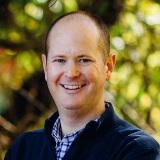
David P. Nannemann, PhD, Vice President, Rosetta Commons Foundation

David is an expert in protein engineering and computational design, with extensive experience applying AI-driven modeling tools in an industry setting. He serves as Vice President of the Rosetta Commons Foundation and Industry Chair on the Rosetta Commons board, helping bridge academic advancements with industry applications. As Managing Member of Rosetta Design Group, he collaborates with companies of all sizes to tackle complex challenges in biologics design. David's deep expertise in leveraging cutting-edge tools like Rosetta, AlphaFold, and diffusion-based models for protein design make him an invaluable guide for participants looking to apply AI-driven biologics design in real-world settings.

* 不測の事態により、事前の予告なしにプログラムが変更される場合があります。

Choose your language
Traditional Chinese
Simplified Chinese
Korean
English

更新履歴
2026/06/26
アジェンダ・講演者・スポンサー更新
2026/06/01
講演者更新

会議の詳細はこちらをご参照ください